On February 18, Mutur Beltz will inaugurate the exhibition A media lumbre (Half-lit), curated by Blanca de la Torre, a collective show that brings together proposals from contemporary artistic practices that open up spaces for historically neglected materials, knowledge, and gestures. Ceramics, clay, wool, textiles, natural fibers, as well as sounds, silences, and the voice appear here as vehicles of memory, knowledge, and resistance.
Among the participating artists is Laurita Siles, whose presence in this exhibition has a particularly emotional significance. Trained in Fine Arts at the Polytechnic University of Valencia, Laurita recalls her university days visiting exhibitions around the city with her friends, imagining possible futures. Returning now to Valencia as part of an exhibition at Mutur Beltz is a dream come true for her and a gesture of return filled with affection and memory.
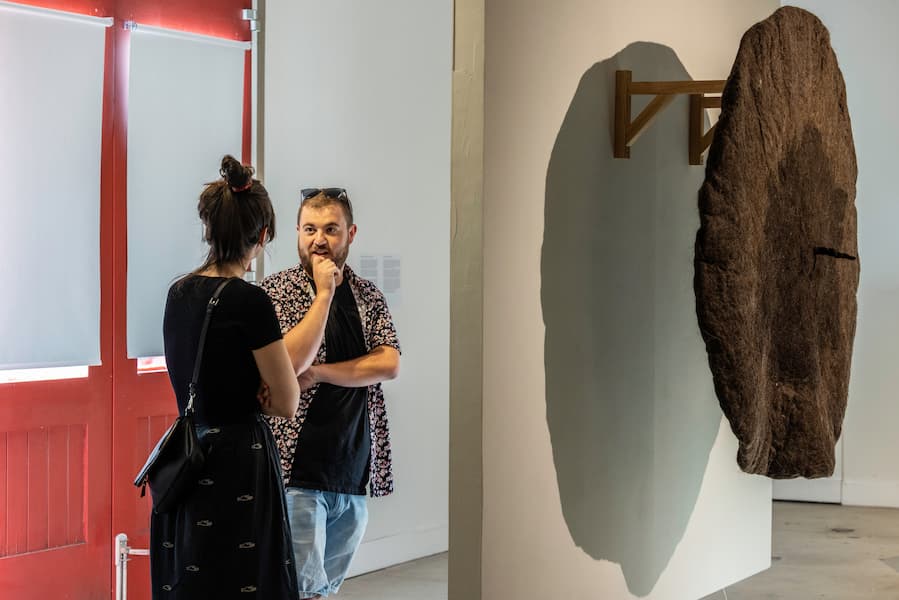
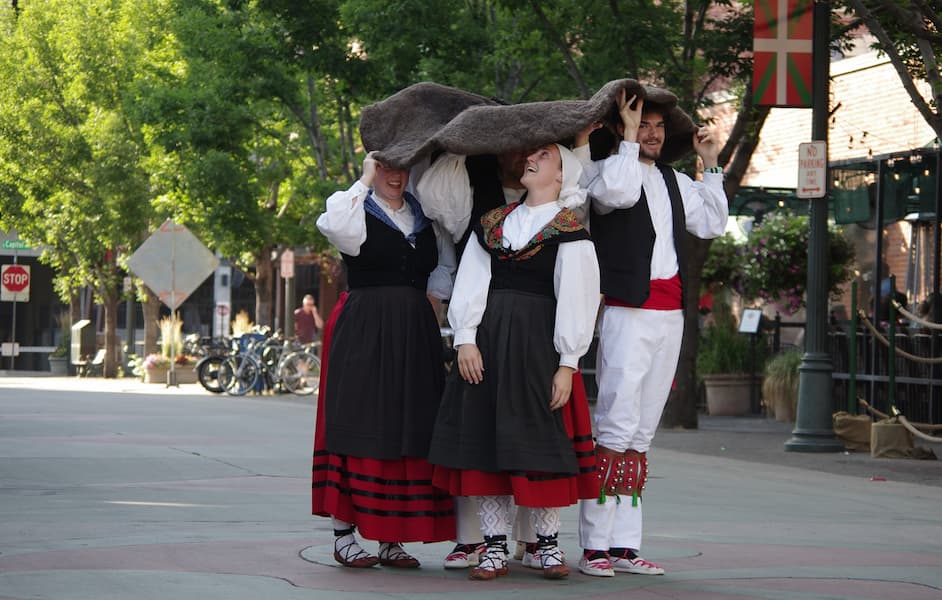
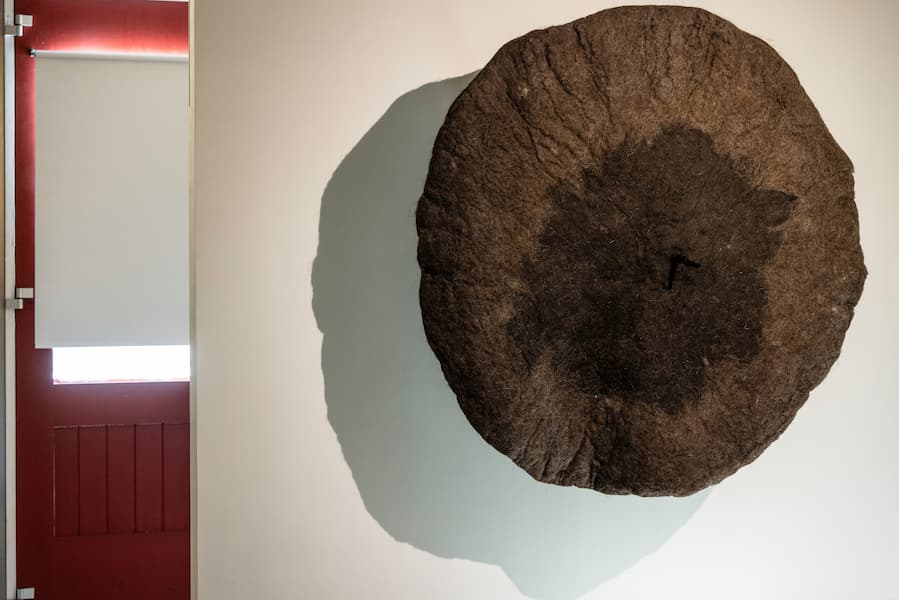
In A media lumbre, Laurita Siles presents the work Txapela Big Size (2022), a piece developed during an artist residency at MING Studio, Boise (Idaho) and conceived for the Basque-American community. In a context where scale—streets, cars, appliances—has become ideology, the artist responds with a txapela of excessive proportions. Exaggeration here functions as a mirror and as irony: excess as a form of resistance.
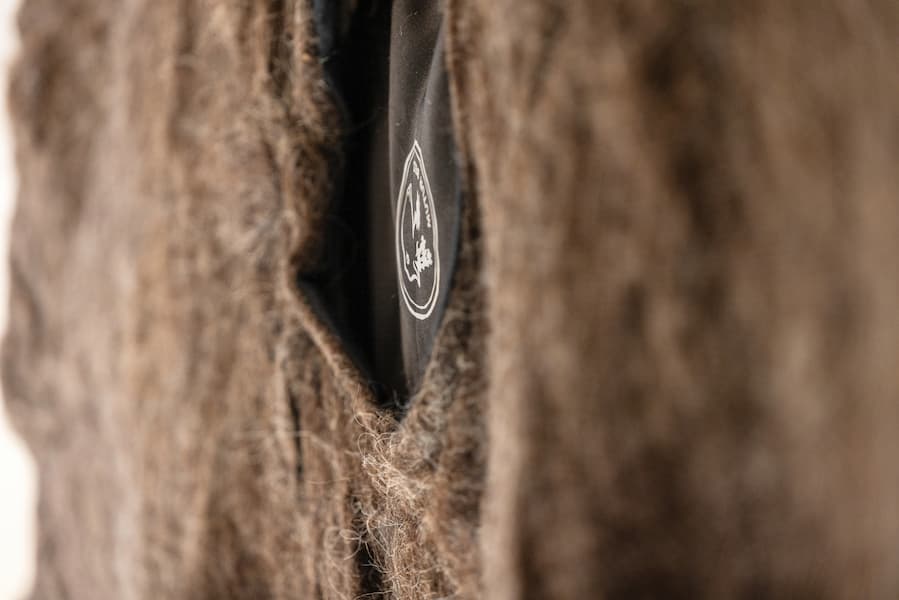
The piece is made from two types of wool steeped in history. On the one hand, wool from Carranzana sheep, a native breed from the Karrantza Valley that is currently in danger of extinction; on the other, wool from Navajo-Churro sheep, the first domesticated sheep breed in North America, introduced by Spanish colonizers in the 16th century and later incorporated by the Navajo people as a central element of their economy and culture.
The extermination of Navajo-Churro herds was one of the US government’s strategies to subdue and “civilize” the nomadic Navajo population, a process that today can be interpreted as genocide. Although the recovery of the breed began in the 1970s and it is no longer in danger of extinction, it remains a rare and deeply symbolic species: an emblem of memory, resistance, and reparation.
By combining Carranzana wool and Navajo-Churro wool, Txapela Big Size proposes a resonance between marginalized cultures, a common fabric between territories marked by stories of loss, dispossession, and survival. Wool—a humble and radical material—ceases to be waste and becomes a document, an archive of collective memory and affection.
The work does not shelter: it challenges.
It does not represent: it resists.
In this textile gesture, the material becomes political territory and proposes an economy of care as opposed to production models based on performance and excess. In the case of Karrantza, where the pastoral economy is fading in the face of the advance of intensive dairy farming, the breeding of Carranzana sheep and extensive grazing embody another possible way of life: a relationship with time, territory, and care.
A media lumbre brings together pieces that activate non-hegemonic knowledge linked to the land, oral tradition, and crafts, understanding heritage not only as technique, but as a network of inherited memories, affections, and gestures. A heritage lit by half-light, at the leisurely pace of what persists.
🗓️ Opening: February 18, 2026, 7 p.m.
📍 Mutur Beltz